Registered NSW certifier · Class 1 & Class 10
Private Building Certifier for NSW homes, granny flats and pools
CertifiBuild provides private building certification in NSW, limited to Class 1 and Class 10 buildings. We issue complying development certificates (CDCs), construction certificates (CCs) and occupation certificates, take on the principal certifier role and carry out critical stage inspections.
Certifying a safer tomorrow
Registered, insured and accountable
Lodged through
NSW Planning Portal
Regulated by
Building Commission NSW
Consumer guidance from
NSW Fair Trading
Assessed to the
National Construction Code
Compliant with the
Building Code of Australia
Backed by a
Fully registered certifier
We are
Fully insured
Homes and outbuildings
Class 1 and 10 specialists
Metro and regional
Certifying across NSW
Servicing
39 council areas
Covering over
1,200 suburbs
Built on
10+ years of experience
No jargon
Plain-language reports
Online or by phone
Quick inspection booking
Our services
The right support, at every stage
CertifiBuild provides every building certification service a Class 1 or Class 10 project needs in NSW, from the first plan review through to the occupation certificate. See every service we offer
Complying Development Certificates (CDC)
A single certificate that grants planning and building approval together for homes, granny flats, pools and alterations that meet the NSW codes, with no separate DA.
Construction Certificates (CC)
We check your construction plans against the National Construction Code and your DA conditions, and issue it before work begins on site.
Principal Certifier
Appoint us to oversee your build from start to finish. We carry out each required stage inspection and confirm the work matches your approval.
Critical Stage Inspections
Compulsory checks at key points of the build, covering footings, the slab, framing, waterproofing in wet areas and stormwater.
Occupation Certificates (OC)
The last certificate in the process, issued when the final inspection and document review are done, confirming the building is fit to move into or use.
BCA Compliance Reports
Inspection-based reports that assess a Class 1 or 10 building against the Building Code of Australia and document what needs attention.
Building types
What are you planning?
We certify Class 1 homes and dwellings, along with the Class 10 outbuildings and structures built alongside them. Pick your project to see the approvals and steps involved.
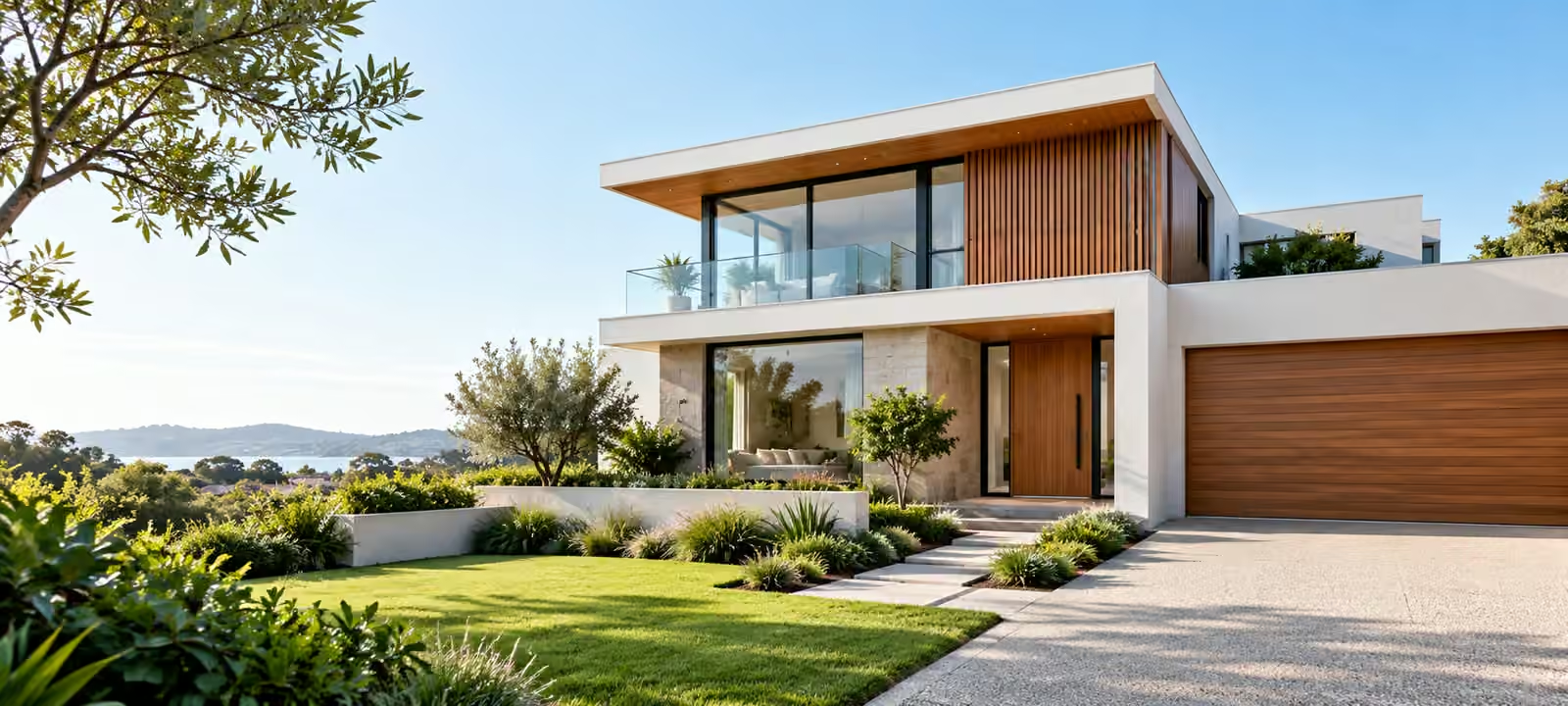
Homes and dwellings (Class 1)
New homes, duplexes, granny flats, alterations and small boarding houses where no dwelling sits above another.
- Single storey homes
- Double storey homes
- Three storey homes
- Knockdown rebuilds
- Alterations and additions
- Duplexes
- Triplexes
- Townhouses and terraces
- Granny flats
- Boarding houses
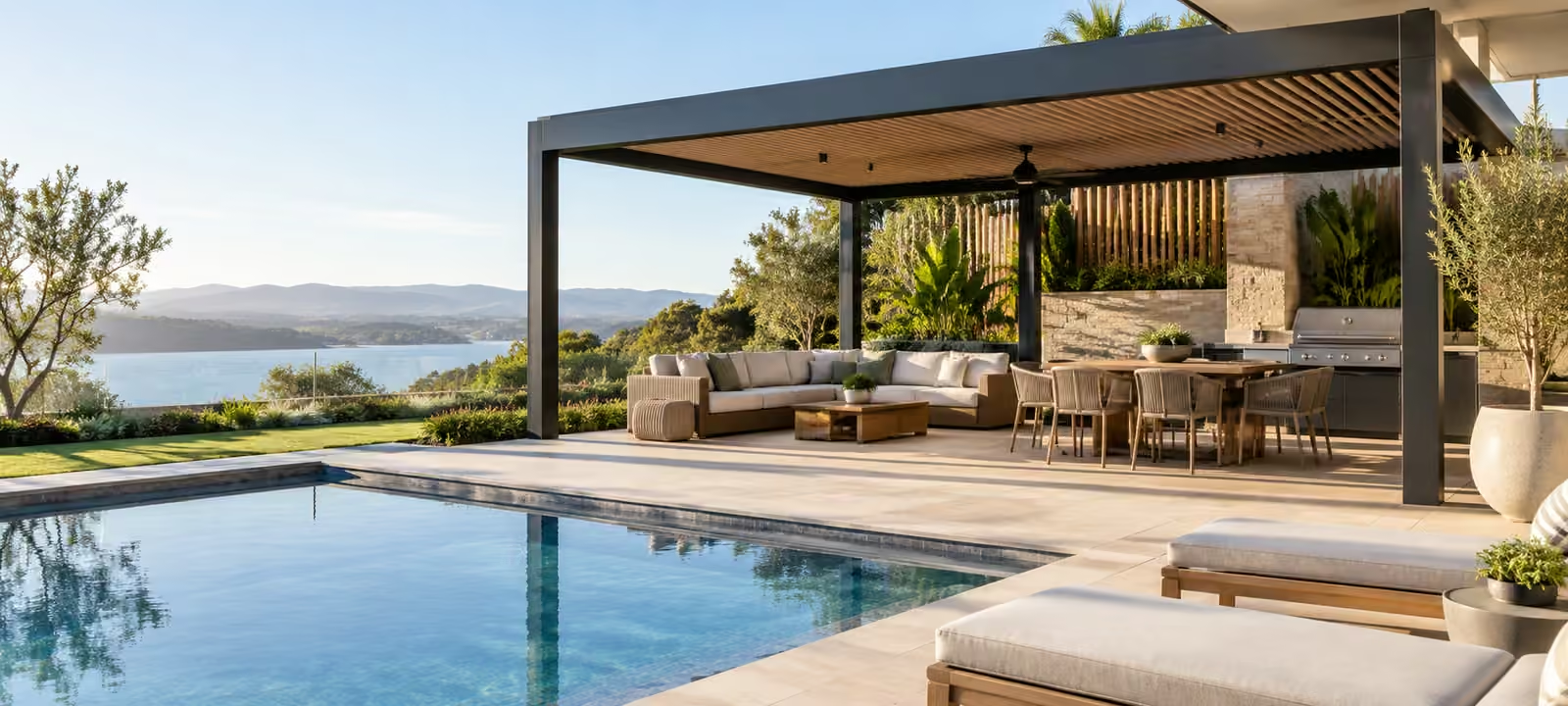
Outdoor structures (Class 10)
Buildings and structures not meant for living in, usually built with or beside a house, including pools and their safety barriers.
- Swimming pools and spas
- Pool barriers
- Garages and carports
- Sheds and outbuildings
- Decks, pergolas and patios
- Retaining walls
- Private bushfire shelters
- Specialist structures
What counts as a Class 1 building
The National Construction Code groups buildings by how they are used. Class 1a covers a single dwelling, such as a detached house, each home in a side-by-side duplex, or a townhouse or terrace separated from its neighbour by a fire-resisting wall. Class 1b covers small boarding houses, guest houses and hostels with a total floor area not exceeding 300 square metres and no more than 12 residents.
What counts as a Class 10 building or structure
Class 10 is for buildings and structures that people do not live in. Class 10a includes private garages, carports and sheds. Class 10b includes fences, retaining walls, masts and swimming pools. A private bushfire shelter falls under Class 10c. Each class has its own construction requirements under the National Construction Code, which is why the class is confirmed at the start of every assessment.
Client reviews
What our clients say
Excellent service from start to finish. The team explained the process clearly and made obtaining our approval straightforward and stress-free.
Sarah M.
Oran Park · 2023
Very fast turnaround. We were on a tight schedule and they delivered everything ahead of time. Highly recommended.
J. Thompson
Edmondson Park · 2023
Professional, knowledgeable and easy to deal with. Their advice helped us avoid costly issues later in the project.
Daniel R.
Gregory Hills · 2023
The process was extremely easy. Every step was explained clearly and communication was excellent throughout.
Emily K.
Tahmoor · 2023
Great value for money. Competitive pricing without sacrificing quality service.
T. Wilson
Glenmore Park · 2023
Very responsive and professional. Reports were detailed and easy to understand.
Michael S.
Marsden Park · 2023
Outstanding customer service. Questions were answered promptly and the entire experience was hassle-free.
Laura P.
Harrington Park · 2024
Fast, efficient and reliable. The approval process was completed far quicker than expected.
A. Roberts
Dapto · 2024
Friendly team with excellent attention to detail. Their guidance gave us confidence throughout construction.
Jessica B.
Austral · 2024
Competitive pricing and transparent fees. No surprises and great service from beginning to end.
C. Edwards
Narellan Vale · 2024
Very easy process. Everything was organised efficiently and communication was exceptional.
Nathan G.
Leppington · 2024
The speed of service was incredible. Reports and approvals were completed much faster than anticipated.
Rachel T.
Schofields · 2024
Professional and knowledgeable staff who genuinely care about helping clients achieve compliance.
B. Carter
Jordan Springs · 2024
Great experience from the first phone call through to project completion. Highly recommend their services.
Olivia D.
Catherine Field · 2025
Fair pricing, excellent communication and quick service. Couldn’t ask for more.
K. Mitchell
Picton · 2025
Made a complex approval process feel simple. Very professional and approachable team.
Ethan W.
Middleton Grange · 2025
Professional, reliable, and thorough on statutory compliance. They review construction certificates rapidly and communicate directly with our site team.
Charbel G.
2025
Fantastic experience overall. Efficient service, clear communication and outstanding value for money.
Megan H.
Denham Court · 2026
Clear guidance from our first inquiry to the final inspection. The team handled our outdoor structure approvals smoothly without any council delays.
Cherry
2026
Approval pathways
Which approval does your project need?
In NSW, most residential building work follows one of three pathways. The right one depends on what you are building, the zoning and constraints on your land, and whether the design meets fixed state standards. Choosing correctly at the start avoids redesigns and delays later.
Pathway 1
Exempt development
Some minor work, such as certain small sheds, decks, pergolas and fences, can go ahead without planning or building approval of any kind, provided it satisfies all the standards in the State Environmental Planning Policy (Exempt and Complying Development Codes) 2008. Miss a single standard, such as height, floor area or distance from a boundary, and the work loses its exempt status and must be approved.
Pathway 2
Complying development certificate
A quicker approval route for work that satisfies the fixed standards in state planning policy. Either council or a registered certifier can issue a CDC, and it serves as the planning approval and the building approval in one. In metropolitan areas, neighbours within 20 metres are told before the CDC is approved and again before work begins. Read more about complying development certificates.
Pathway 3
Development application and construction certificate
If a project does not fit the CDC standards, council judges a development application on its merits under its local planning controls. Once the DA is approved, a construction certificate confirms the detailed construction plans meet the National Construction Code and the DA conditions before any work starts.
Not sure which pathway applies? A plan assessment tests your drawings and site against the standards that apply before you commit, so issues are found while they are still simple to fix.
Our process
Clarity, from plans to occupation
Every CertifiBuild project runs through the same five steps, so you always know what comes next and which details to provide.
- 01
Discuss
Share the details of your site and project. We confirm the right route: a DA plus a construction certificate, or a CDC.
- 02
Prepare
We give you a clear list of the plans, reports and certificates the application needs, so nothing is missing at lodgement.
- 03
Assess
We review the design against the planning standards and the National Construction Code, then determine the application.
- 04
Inspect
As principal certifier, we carry out the critical stage inspections and record each one in writing.
- 05
Occupation
Once the final inspection and paperwork checks are complete, we issue the occupation certificate and the building is ready for use.
Before any work starts on site, you must appoint a principal certifier and notify council that work is about to begin. After the final inspection, keep the occupation certificate with your approval documents, as buyers, lenders and insurers may ask for it later. Read more about our role as principal certifier and how an occupation certificate is issued.
Inspections
The inspections your build will need
Critical stage inspections are compulsory checks your principal certifier makes at set points during construction. Each one must happen before that stage is covered up, because hidden work can no longer be checked. For Class 1 and Class 10 work, the stages are:
- After excavation for footings, before the footings are poured
- Before reinforced concrete, such as a slab, is cast on site
- Before framing to floors, walls or the roof is covered
- Before waterproofing in any wet area is covered
- Before stormwater drains and their connections are covered
- For pools, before reinforced concrete is cast on site, and once the safety barrier is up but before any water goes in
- Once all work is finished, ahead of the occupation certificate being issued
Your approval lists the inspections your project needs. A missed inspection can delay or prevent the occupation certificate, so plan each one into your build program. Find out how to book on our critical stage inspections page.
Who we work with
Certification for everyone on the project
Whether you are building your first home or managing several sites, we explain what your project needs and keep every party informed.
Homeowners
As the owner, you choose and appoint your certifier. We explain each approval in plain English, tell you what to expect at every stage and answer your questions directly.
Builders
Clear inspection requirements, booking that fits your program and written records after each critical stage inspection, so your site keeps moving.
Architects and designers
Early plan assessment against the CDC standards and the National Construction Code, so compliance issues are caught before drawings are finalised.
Pool and outdoor contractors
Approvals and inspections for pools, barriers, decks, pergolas, sheds and retaining walls, with clear guidance on what each structure needs.
Getting ready
What to have ready before you lodge
Complete applications move through assessment faster. These are the documents most Class 1 and Class 10 applications need, although the exact list depends on your project and site.
Architectural plans
Scaled drawings: a site plan, floor plans, sections and elevations, marking setbacks, building heights and ground levels.
Survey
A detail survey from a registered surveyor, marking the boundaries, levels, trees, existing structures and any easements.
Planning certificate
A section 10.7 planning certificate from council confirming the zoning and the constraints that apply to the land.
BASIX certificate
Required for new homes, for pools or spas larger than 40,000 litres, and for alterations and additions with a total cost of $50,000 or more.
Engineering and stormwater
Structural engineering details, plus a stormwater plan showing how water from the roof and ground surface is captured and drained away.
Site constraint reports
Where they apply, a bushfire attack level assessment, flood information, a geotechnical report or an arborist report.
Every application also needs the owner's written consent. Builders and designers lodging on behalf of a client can find our lodgement requirements on the builders and architects and designers pages.
Why CertifiBuild
Experience. Accuracy. Results.
Building Commission NSW registers and oversees private certifiers in NSW, under the Building and Development Certifiers Act 2018. Before appointing any certifier, you can look up their registration class and status using NSW's Building Certifiers Public Register. The owner appoints the principal certifier, and a certifier must act impartially even though the applicant pays their fee.
Local NSW knowledge
We work with NSW planning rules, council requirements and site conditions every day.
Class 1 and 10 focus
Houses and residential structures are all we certify, so your project gets specialist attention.
Compliance focused
We check your project against the National Construction Code and your approval at every stage.
Plain-English advice
We explain what is needed and why, so there are no surprises later in the build.
Service areas
39 council areas across NSW
We certify Class 1 and Class 10 projects in the 39 council areas below, grouped by region. Every council sets its own local environmental plan and development control plan, and many sites carry bushfire, flood or heritage constraints that shape which approval pathways can be used.
North Shore & Northern Beaches
9 councils
Western Sydney
6 councils
South West Sydney & Macarthur
5 councils
Eastern Suburbs & City
4 councils
Illawarra & Southern Highlands
4 councils
Please note: CertifiBuild does not take on certification work within The Hills Shire.
FAQ
Clear answers. Better prepared.
What is the role of a building certifier?
A building certifier makes sure building work follows the law, acting independently of the owner, designer and builder. Before anything is built, the certifier tests the plans against state planning rules and the National Construction Code (NCC) and, if they comply, issues a complying development certificate (CDC) or a construction certificate. While work is under way, the principal certifier visits at each critical stage before it is covered. Once everything checks out, an occupation certificate lets people use the building. Certifiers serve the public interest, so designing the work, running trades and enforcing your contract sit outside their role.
Can I use a private certifier instead of council?
Yes. Since 1998, NSW owners have been able to pick a registered private certifier rather than council for most certification work. A private certifier can issue a construction certificate (CC) or a complying development certificate (CDC), and can be appointed principal certifier to inspect the build. Council still decides development applications (DAs), so a DA project goes to council first. The choice of principal certifier belongs to the owner or whoever holds the approval, never the builder. Before signing, check the certifier's registration class in the Building Commission NSW register to make sure it covers your building.
Which documents should I prepare?
Most Class 1 and Class 10 applications start from two things: scaled architectural plans and a detail survey of the lot. On top of those, expect to supply a planning certificate from council, engineering details, a stormwater plan and the owner's written consent. A BASIX certificate joins the set for a new home, a pool or spa over 40,000 litres, or alterations with a total cost of $50,000 or more. Bushfire, flood, soil or tree reports apply only where the site needs them. Share the address and draft drawings with us, and we will list exactly what your job requires.
When should I book an inspection?
Book each critical stage inspection at least 48 hours before the work reaches that stage, and always before it is covered up. Typical points are after excavation for footings, before concrete is poured, before framing is lined, before wet area waterproofing is tiled over and before stormwater lines are buried. A pool also needs a check once its safety barrier is complete and before it is filled. Your approval lists the stages that apply to your job. Hidden work cannot be inspected later, so schedule the bookings into the build timeline from the outset.
What types of buildings do you certify?
We certify only two building classes under the National Construction Code (NCC): Class 1 and Class 10. Class 1 takes in houses, duplexes, triplexes, townhouses and terraces where no home is stacked over another, along with granny flats and small boarding houses. Class 10 applies to structures and outbuildings that are not lived in, for example garages, carports, sheds, decks, pergolas, pools, fences, retaining walls and private bushfire shelters. Apartments, shops, offices and factories belong to other classes, which call for a different certifier with the right registration. Unsure of your class? Send the plans for a quick check.
Which areas do you cover?
Our service area is 39 NSW council areas, reaching north to Newcastle and the Central Coast, west to the Blue Mountains and Lithgow, and south through Wollongong and Kiama to the Southern Highlands. Within Sydney it includes the North Shore, Northern Beaches, Eastern Suburbs, Inner West, Western Sydney, South West Sydney and Macarthur, plus St George and Sutherland. We do not work in The Hills Shire. Every council page explains the local maps and controls that commonly shape approvals there. If your street is close to a council boundary, your rates notice settles which council covers it.
What is a BASIX certificate?
A BASIX certificate sets out how a new or renovated NSW home will save water and energy and stay comfortable. BASIX is short for Building Sustainability Index. You create it online on the NSW Planning Portal, and it must be ready before the application goes in. It is needed for any new home, renovation work worth at least $50,000, and a pool or spa holding over 40,000 litres. Features such as insulation, glazing or a rainwater tank are then shown on the drawings. Before the occupation certificate is issued, the principal certifier confirms those features are in place.
Do I need an occupation certificate?
Yes. Any newly built home or structure, or newly built part of one, needs an occupation certificate (OC) before it is used. Nobody may live in or use it until the principal certifier has issued that certificate. That covers a new house, a granny flat, an extension or a pool alike. The OC follows the final inspection plus a check of completion documents, for example waterproofing, smoke alarm and BASIX certificates. File the OC with your approval papers, because buyers, lenders and insurers often request it. Asking each trade for its certificate when it finishes stops the last step stalling.
Ready to get started?
Let's get your project started
Share a few project details. We will advise which approval route applies and which documents to send.